You’ve just rented a hall for a wedding after-party. Or maybe you manage a small community theater and want to sell drinks during a comedy show. Then you hear the phrase: approved public entertainment facility.
Suddenly, everything feels complicated. Can you bring extra chairs? Is live music allowed after midnight? What about serving alcohol without a separate permit?
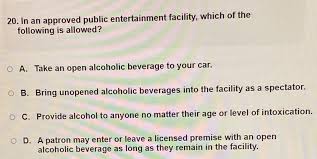
You are not alone in asking: in an approved public entertainment facility which of the following is allowed?
This article answers that question clearly, with real examples, local rules explained in plain English, and practical tips to keep your event legal and stress‑free.
By the end, you’ll know exactly what activities, equipment, and sales are permitted—and which ones will get you a fine or a shutdown.
What Does “Approved Public Entertainment Facility” Actually Mean?
Before we answer what is allowed, let’s define the term.
An approved public entertainment facility is any venue that:
- Is open to the public (not a private home)
- Has received official approval from local authorities (city, county, or state)
- Is used for entertainment like live music, dancing, theater, comedy, or film screenings
- Meets safety codes (fire exits, capacity limits, accessibility)
Examples include:
- Concert halls
- Nightclubs (with entertainment licenses)
- Community theaters
- Ballrooms
- Approved banquet halls hosting entertainment
Important: A simple restaurant without an entertainment license is not an approved public entertainment facility. Even a backyard wedding with a DJ is not covered under these rules.
Now, let’s answer the core question directly.
In an Approved Public Entertainment Facility Which of the Following Is Allowed? (The Short Answer)
If you are studying for a license exam or managing a venue, you often see this question as a multiple‑choice list. Here is the direct answer:
In an approved public entertainment facility which of the following is allowed:
✅ Serving alcoholic beverages – but only if you have a separate liquor license and follow specific serving rules
✅ Live amplified music – within allowed hours and decibel limits
✅ Dancing by patrons – provided floor space meets safety codes
✅ Selling tickets for entry – as long as capacity is not exceeded
✅ Using portable staging or risers – if they are fire‑resistant and properly secured
What is not allowed (common traps):
- ❌ Selling alcohol without a separate on‑premise liquor license
- ❌ Exceeding posted occupancy limits (even if tickets were sold)
- ❌ Blocking emergency exits with extra chairs or decorations
- ❌ Open flames (candles, torches) without a special permit
Let’s break down each allowed activity in detail.
1. Serving Alcohol – Permitted But With Strict Conditions
This is the most misunderstood area.
In an approved public entertainment facility which of the following is allowed regarding alcohol?
Yes – serving alcohol is allowed, but only after you meet three requirements:
- Separate liquor license – Your entertainment approval does NOT include alcohol. You need a specific on‑premise license (e.g., “tavern license” or “restaurant liquor license”).
- Age verification system – Mandatory ID checks at entry or point of sale.
- No serving to visibly intoxicated persons – Staff must be trained (often called “TIPS” training).
Real‑life example:
A small comedy club in Austin, Texas, had an entertainment permit for stand‑up shows. They started selling beer without a liquor license. The city fined them $5,000. The correct step? Apply for a mixed‑beverage permit in addition to the entertainment approval.
🍸 Tip: If your event is private (invitation only), some jurisdictions relax alcohol rules. But for public entertainment, always assume you need the full license.
2. Live Music and Amplified Sound – Allowed Within Limits
Music is the heart of most entertainment facilities. In general, live music is allowed, but there are two common restrictions:
- Decibel limits – Most cities enforce a maximum volume (e.g., 85 dB measured from property line)
- Curfews – Indoor amplified music often must end by 12 AM or 2 AM; outdoor by 10 PM
What the law usually says:
“An approved public entertainment facility may host live amplified music provided that sound levels do not disturb adjacent properties and all noise ordinances are followed.”
Not allowed:
- Playing music after curfew without a special event permit
- Using outdoor speakers pointed at residential buildings
Example: A wedding hall with an entertainment license can have a live band until 1 AM if located in a commercial zone. But if it’s near apartments, the same hall might have to stop at 11 PM.
3. Dancing – Almost Always Allowed (But Space Matters)
If you are hosting a dance party, good news: dancing by patrons is almost always allowed in approved public entertainment facilities.
However, there are safety rules you must follow:
- Floor load limits – No more than 1 person per 5–7 sq. ft. of dance floor
- No blocking aisles – Dance floors cannot obstruct paths to exits
- Proper flooring – Non‑slip surfaces are required if alcohol is served
Related keyword: “public entertainment facility dancing regulations”
Many facility managers ask: “Do I need a separate dance permit?”
In most US cities, no – the entertainment approval covers dancing. But a few older ordinances (e.g., parts of New York pre‑2017) had “caberet laws” requiring dance licenses. Check your local codes.
💡 Tip: If your event includes professional dancers or exotic dance, that may require a different adult entertainment license.
4. Ticket Sales and Capacity Limits – What’s Allowed
Selling tickets is a normal part of running an entertainment venue. Yes, it is allowed.
But here is the critical rule: You cannot sell more tickets than your approved capacity.
Typical capacity limits for approved facilities:
| Type of Facility | Max Occupancy (without sprinklers) | With Sprinklers |
|---|---|---|
| Small theater | 100 | 150 |
| Nightclub | 150 | 250 |
| Banquet hall | 200 | 350 |
These numbers come from fire codes (IFC or NFPA 101). Your approval letter will state your exact capacity.
Not allowed:
- Selling standing‑room tickets when capacity is based only on seats
- Adding temporary chairs beyond the approved layout
Real case: A popular music venue in Chicago sold 50 “standing” tickets above their 200‑person limit. A fire marshal inspected, found 267 people, and shut down the show mid‑performance. Fines exceeded $10,000.
5. Portable Staging, Risers, and Extra Seating
In an approved public entertainment facility which of the following is allowed regarding extra equipment?
Yes – you may add portable staging, risers, or extra chairs, but only if they meet fire safety standards.
Requirements:
- Fire‑retardant materials (certification label required)
- No obstruction of exit paths (minimum 44 inches clear width)
- Secured to prevent tipping (for risers over 18 inches high)
Example of allowed use:
A community theater adds two rows of folding chairs for a sold‑out show. The chairs are placed in an existing open area, leaving 6 feet to the nearest exit. ✅ Allowed.
Not allowed:
Placing chairs in front of exit doors or inside the “aisle accessway” marked on your facility diagram.
Common “Trick” Questions – What Looks Allowed But Is Not
Many people fail licensing exams because they assume everything entertainment‑related is automatically allowed. Here are three common traps:
❌ Selling alcohol without a separate license
Even with full entertainment approval, you cannot serve one beer without a liquor license.
❌ Open flames (candles on tables)
Unless you have a pyrotechnics permit and fire watch personnel, open flames are prohibited in almost all public facilities.
❌ Allowing patrons to bring outside alcohol
BYOB is generally not allowed in approved public entertainment facilities. It violates liquor control laws in most states.
Real‑Life Use Case: Planning a Wedding Reception with a Band
Let’s say you are a bride planning a 150‑guest wedding. You rent an approved public entertainment facility (a ballroom with a dance license). You want to know:
In an approved public entertainment facility which of the following is allowed for my wedding?
| Activity | Allowed? | Condition |
|---|---|---|
| Live 6‑piece band | ✅ Yes | Must end by 1 AM |
| Open bar | ✅ Yes | Requires separate one‑day liquor permit |
| Dancing until midnight | ✅ Yes | Floor space meets code (900 sq ft for 150 dancers) |
| Sparklers at exit | ❌ No | Open flame without permit |
| Extra chairs for ceremony | ✅ Yes | Keep aisles clear |
Result: You have a legal, safe, and fun wedding. Just skip the sparklers.
FAQ – Your Questions Answered
Q1: In an approved public entertainment facility which of the following is allowed – smoking indoors?
A: No. Almost all US states and municipalities prohibit indoor smoking in public entertainment facilities. Some allow designated outdoor smoking areas if they are away from entrances and ventilation intakes.
Q2: Can I sell food without a separate permit?
A: Yes, in most cases. Selling pre‑packaged snacks or simple food (pizza, sandwiches) is typically allowed under the entertainment approval. However, cooking on‑site (hot grease, grills) may require a food service permit from the health department.
Q3: Are children allowed in an approved public entertainment facility?
A: Yes, unless the facility has a specific age restriction (e.g., 21+ nightclub). For all‑ages venues, children are allowed but must follow same occupancy and safety rules. Some local laws require a separate “all‑ages” endorsement if alcohol is served.
Q4: What happens if I violate the allowed activities?
A: Penalties range from a warning to immediate closure of your event. Common fines: 500–10,000. Repeat violations can lead to revocation of your entertainment approval for 1–5 years. In extreme cases (blocked exits leading to injury), criminal charges are possible.
How to Verify What Is Allowed in Your City
Rules vary by location. Always take these three steps:
- Read your approval letter – It lists specific conditions (max capacity, hours, noise limits).
- Call your local fire marshal – They are surprisingly helpful and can answer “is X allowed?” in 2 minutes.
- Check municipal code online – Search “[your city] public entertainment facility regulations”.
🏛️ Pro tip: If your facility is in a historic district or near a school, additional restrictions may apply.
Key Takeaways (Summary)
Let’s bring it all together. When someone asks “in an approved public entertainment facility which of the following is allowed”, here is your complete answer:
| Activity | Allowed? | Condition |
|---|---|---|
| Live music | ✅ Yes | Within noise limits & curfew |
| Dancing | ✅ Yes | Safe floor space |
| Alcohol sales | ✅ Yes | Separate liquor license required |
| Ticket sales | ✅ Yes | Cannot exceed occupancy |
| Portable staging | ✅ Yes | Fire‑retardant & secure |
| Extra chairs | ✅ Yes | Must keep exit paths clear |
| Open flames | ❌ No | Permit needed (rarely granted) |
| BYOB | ❌ No | Prohibited in almost all public facilities |
| Smoking indoors | ❌ No | Not allowed |
The single most important rule: Your entertainment approval is not a blank check. It works together with fire codes, liquor laws, and noise ordinances.
Final Thoughts
Running or using an approved public entertainment facility should be fun, not frightening. The rules exist to keep people safe, not to ruin your event.
Now you know the answer to in an approved public entertainment facility which of the following is allowed:
✔️ Alcohol with a license
✔️ Live music within hours
✔️ Dancing safely
✔️ Ticket sales under capacity
✔️ Extra seating if exits remain clear
And you also know what is not allowed: open flames, indoor smoking, and exceeding your posted limit.
Next time you plan an event or take a certification exam, come back to this guide. You’ve got this